A Body-Doubling Routine for Studying
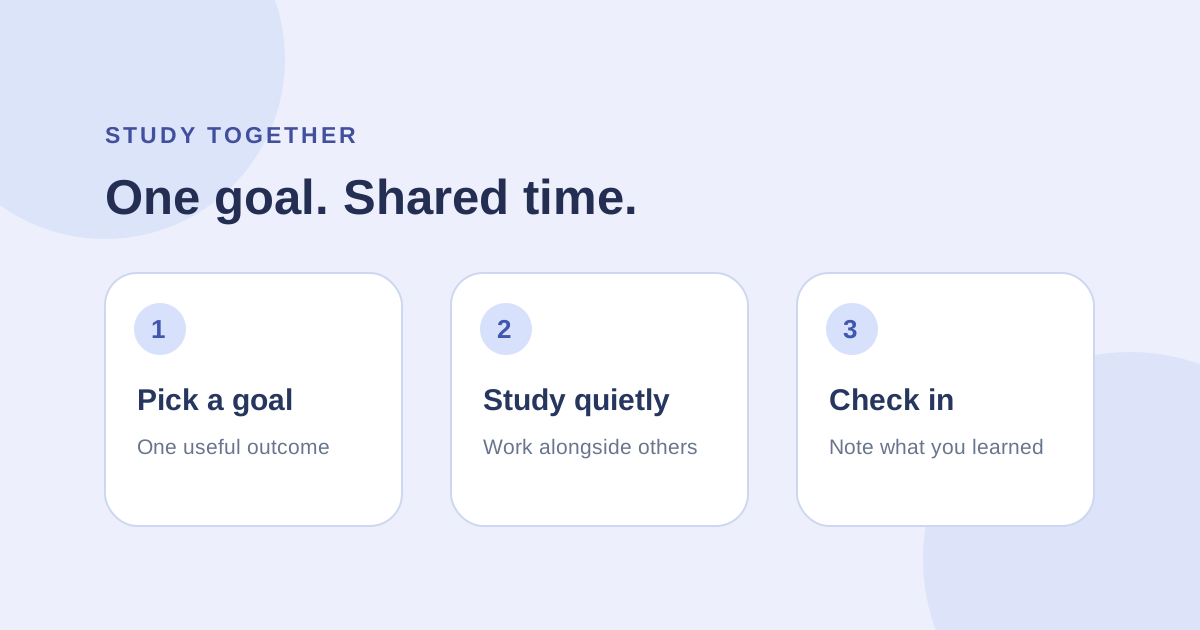
Study together without working on the same subject
Body doubling means working on your own task while someone else is also present and working. In a study room, that person does not need to know your course or solve the same assignment. The shared time and visible effort create a useful boundary around independent work.
This makes it different from tutoring or a group project. You remain responsible for your material, your study method, and the rules of your course. The room simply helps you begin, stay with a chosen block, and check what you learned.
Before joining: prepare one study outcome
Pick a result you can verify when the timer ends. “Study biology” is broad; “answer ten retrieval questions about cell division” is clear. “Work on the essay” could become “write a rough outline with three claims.”
Open the relevant material before the session starts, but do not spend the entire preparation period reorganizing notes. Choose the one textbook chapter, problem set, or draft you need. Keep a scratchpad nearby for questions that arise without opening a new browser trail every few minutes.
| Study task | Checkable session outcome |
|---|---|
| Revise a chapter | Answer ten questions from memory, then check the weak areas |
| Start an essay | Write an outline and one imperfect opening paragraph |
| Practise mathematics | Attempt four problems and mark the step where you get stuck |
| Review a lecture | Summarize the main ideas without looking at the slides |
At the start: share only the useful amount
If the room has an intentions stage, a short sentence is enough: “I will attempt four calculus problems” or “I will draft my essay outline.” You do not need to present your notes or explain your grades. A clear intention helps you return to the task when you are tempted to switch topics.
Choose a virtual coworking room for students when you want the flexibility to join at a convenient time. A scheduled session can be better when putting a specific start time on the calendar is what gets you to your desk.
During the block: protect attention, not appearance
Use the room's focus stage for independent work. You can keep your microphone off unless the session calls for a verbal check-in. Follow the room's camera or screen-sharing rules, but do not make being visibly busy the objective. A useful session can include reading, thinking, writing, and getting stuck on a hard problem.
If you hit a question you cannot answer, write down the exact obstacle. “I do not know how to start problem three” is actionable. “I am bad at this subject” is not. If the topic needs outside help, save that question for a teacher, classmate, or reliable source after the focus block.
For a short assignment or difficult start, try a 25-minute focus session. For a problem set or draft, 50 minutes may leave enough room to warm up and make progress. Choose the duration for the task, not because one number is universally best.
Our focus-session length guide compares shorter and longer blocks when you need help deciding.
At check-in: report evidence, then choose the next move
The end of the block is a good time to compare the intention with the result. You might say, “I answered eight questions and found two weak topics,” or “I outlined the essay, but the introduction needs another pass.” Both are real progress.
Write a small next action before leaving: “review those two topics,” “ask about problem three,” or “draft the first body paragraph.” If you plan a second block, take the scheduled break seriously instead of dragging one tired session into the next.
Keep the routine flexible
Some days you need company to start. Other days you only need a timer and a quiet desk. A study room is one tool, not a rule that every task must be social. Use it when shared presence and a clear session boundary make the work easier to begin or finish.
If you are preparing for an assessment, respect its rules. A coworking room can support independent preparation, but it should not be used during an exam or assignment that prohibits outside communication or devices.