25, 50, or 90 Minutes: Choose the Right Focus Block
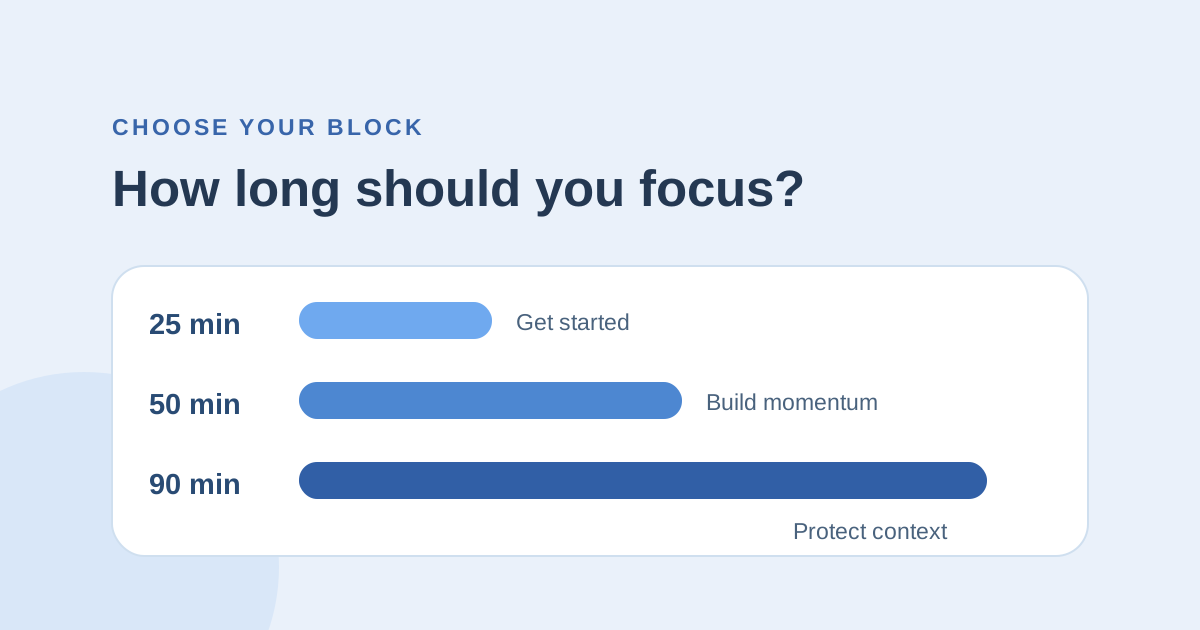
Choose the length for the work in front of you
The best focus-session length is not a universal number. It depends on how hard it is to begin, how much setup the task requires, and whether stopping would break useful context. A short block can help you start; a longer block can protect momentum once you already know what you are doing.
MySession offers different room formats and stage timelines. Use the duration as a tool for the task, not as a measure of how productive you should be.
| Block | Often useful when… | Example outcome |
|---|---|---|
| 25 minutes | Starting is the main obstacle | Draft an outline or clear one small queue |
| 50 minutes | The task needs a little warm-up | Write a section or complete a problem set |
| 90 minutes | Context is expensive to rebuild | Develop a design, analyse data, or draft deeply |
Try 25 minutes when the start is the work
A short block is easier to accept when the task feels vague or unpleasant. Name a result small enough to see within the interval: open the file, draft three headings, or answer the first questions. You can decide on a second block after the first one ends.
The 25-minute session format is useful for quick administration, revision, or the first pass of something larger. If setup consumes half the block every time, that is a sign to prepare materials earlier or choose a longer room next time.
Try 50 minutes for a normal work unit
Fifty minutes often leaves room to settle in, do meaningful work, and still reach a nearby stopping point. It works well for a writing section, a set of practice problems, or a focused project task with a clear outcome.
Use the first few minutes to re-open the context, not to redesign the entire plan. If ideas for other tasks appear, park them in a note. At the end, capture what changed and the next action. See the 50-minute session format for examples of suitable tasks.
Try 90 minutes when continuity matters
Some tasks have a high context cost: complex analysis, programming, design, or long-form writing. A longer interval can protect that context from repeated stopping and restarting. It helps most when the problem, materials, and desired milestone are already reasonably clear.
A 90-minute focus session does not require ninety minutes of motionless concentration. If the room timeline includes a break, use it. If your attention is deteriorating, pause or change posture. Longer is not automatically better, and a small task does not become more valuable because you spent an extra hour on it.
Use three questions before booking
- Is the next action clear? If not, choose a short block to discover it.
- How much time will setup take? If files, tools, or notes take time to load, prepare them first or choose a longer block.
- What would count as a useful finish? Pick a result you can check at the end, even if the larger project remains unfinished.
If you are unsure, start shorter. Completing a modest block and choosing another one is better than avoiding a long commitment. A shared focus room can add accountability to any of these lengths without requiring everyone to work on the same task.
For days when even a short block feels difficult to enter, follow the step-by-step guide to starting a focus session.
Review the result, not the timer
At check-in, ask whether you made the intended progress and whether the length helped. If you consistently finish early, try a smaller room or a larger outcome. If you always run out of time after finally finding focus, use a longer block. This simple review makes the next choice better than following a fixed rule forever.