How to Start a Focus Session When You Feel Stuck
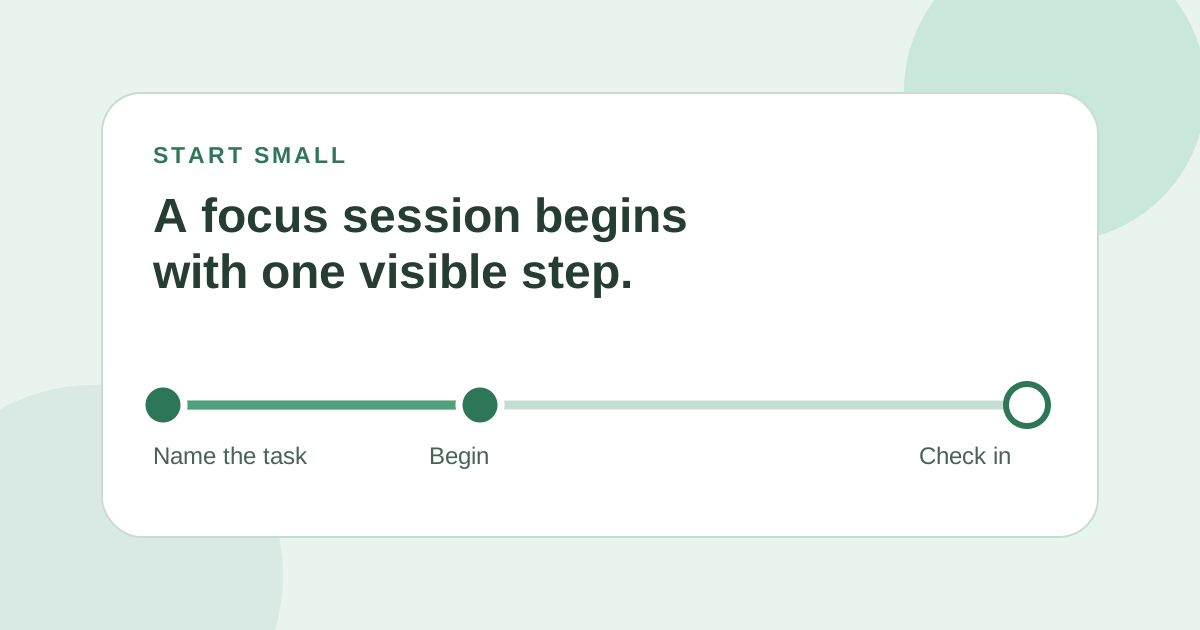
First, make the task smaller than your resistance
When a task is difficult to begin, the problem is often not a lack of time. The next action is unclear, the materials are scattered, or the task feels too large to finish in one sitting. A focus session does not have to solve the entire project. It only needs to create a usable start.
Try describing the work as an action you can see: “open the document and draft three headings” is easier to begin than “finish the report.” If that still feels large, reduce it to “open the document and write the first heading.” You can expand the task after you are moving.
A ten-minute on-ramp
Use the first ten minutes as a launch sequence, not a performance test.
- Minute 0–2: choose one outcome. Write a small result that would make the block worthwhile. Avoid stacking several unrelated tasks together.
- Minute 2–4: open only what you need. Put the right document, tab, book, or tool in front of you. Close the tabs that belong to later work.
- Minute 4–5: join a room. Choose a 24/7 focus room if waiting for a booking would become another obstacle, or a scheduled session if the appointment itself helps you show up.
- Minute 5–10: do the first visible action. Type a rough sentence, solve one problem, sort one folder, or write a three-item outline. Do not grade the result yet.
This is deliberately modest. The first action gives you information that planning from a distance cannot: which part is actually hard, and what the next step should be.
State an intention you can check later
An intention is more useful when it describes an observable result than when it promises a feeling. “Focus hard” is difficult to evaluate. “Draft the opening paragraph” can be checked at the end of the session.
For example, if the project is “prepare a presentation,” a useful first intention could be “list the audience's three questions.” If the project is “clean up finances,” try “categorize last week's transactions.” The intention should fit the time available, not the size of your ambition.
If a room includes an intentions stage, use it to say what you are doing without explaining your whole situation. Other people can work on different tasks while the shared start gives everyone a little structure. Learn more about that format in our body-doubling guide.
Pick a block that lowers the barrier
A 25-minute session is often enough for the first pass of an avoided task. A 50-minute session gives more room when the work requires some setup. A longer block makes sense when you already know the task and need continuity, not when a longer timer would make starting feel heavier.
If you are unsure which block fits, use the 25, 50, or 90-minute focus-session guide to match the length to your task.
The timer is a boundary, not a target for perfect concentration. If you lose your place, return to the next visible action. If you discover that the task was defined badly, use that discovery to resize it rather than abandoning the block.
Close with a handoff to your future self
At the check-in, record three short things: what changed, what remains, and the first action for next time. “Wrote two headings; the evidence section remains; open the notes and choose one source” is more useful than “worked on the report.”
Some sessions end with a break, others with another focus stage. You do not have to continue just because the room is still open. Decide deliberately whether another block will help.
If the start still does not happen
Try changing one variable at a time. Make the outcome smaller, switch to a shorter room, or ask whether the task needs missing information before it can begin. A shared room supplies presence and a start time; it cannot define an impossible or underspecified task for you.
The goal is not to feel motivated before you enter. It is to leave the session with one real action completed and a clearer way back in.