Remote-Work Accountability Without Another Meeting
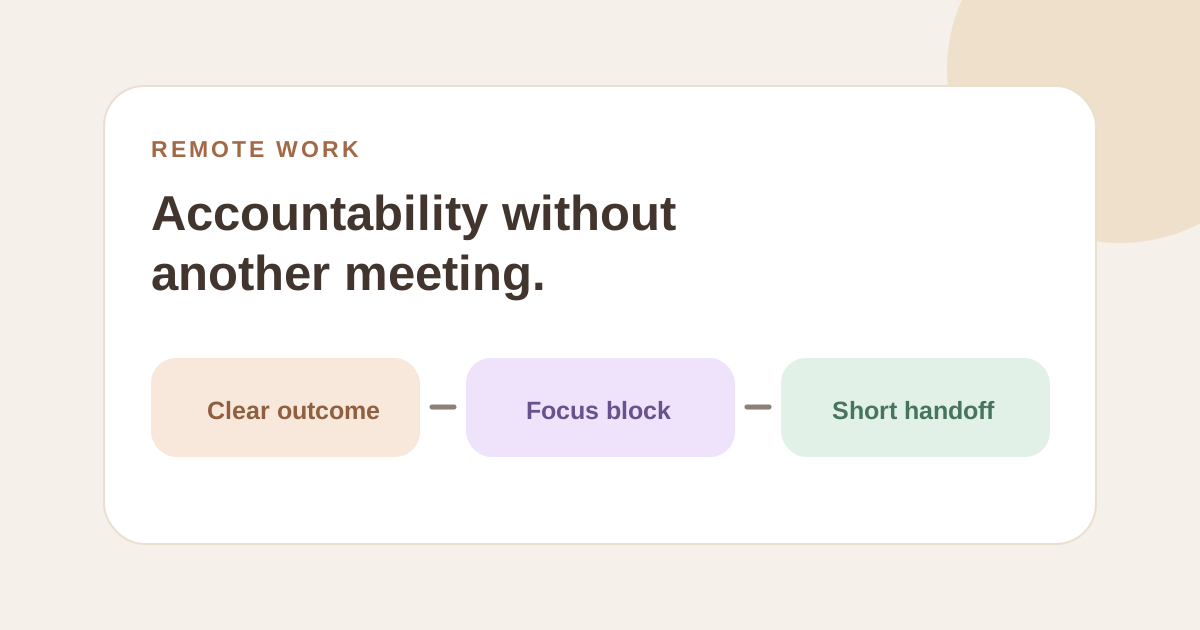
Accountability does not have to mean another status call
Remote work can remove the simple cues that an office provides: arriving, seeing others begin, and closing the day. A status meeting is one way to create structure, but it also interrupts work. Virtual coworking offers a lighter option: people work on their own tasks at the same time, with a visible start and a short check-in.
The purpose is not to prove that you were online. It is to make an independent work block easier to start and easier to finish. You can keep private client or company details out of the room while still naming a useful outcome.
A three-part daily routine
1. Start with a result, not an activity. Instead of “work on the project,” choose “send the first draft to the reviewer” or “identify the three open decisions.” Make it small enough for the session you have chosen.
2. Share one protected block. Join a scheduled group session or 24/7 room. State the intention if the room has an intentions stage, then work independently. Use a short session for a difficult start and a longer one for work that requires continuity.
3. Leave a handoff. At the end, write what changed and the first action for the next block. A handoff keeps a future session from starting with another round of figuring out where you were.
If the hardest part is beginning the block, try the ten-minute focus-session on-ramp before you adjust the rest of your routine.
For example: “Reviewed the draft, resolved two comments, waiting for one decision; next, update the summary after the reply arrives.” That tells you more than a green online indicator or a calendar full of meetings.
Match the room to the kind of work
Not every remote task needs the same amount of social structure.
| Situation | Useful approach |
|---|---|
| You keep postponing a small admin task | Enter an available room and commit to the first 25 minutes |
| You need a predictable workday start | Book a recurring time with a hosted group |
| You have complex writing or design work | Choose a longer block and prepare materials before joining |
| You need to coordinate with teammates | Use a real meeting for decisions, then a focus room for execution |
This is why virtual coworking is not a replacement for collaboration. Meetings are useful when people need to decide something together. A focus room is useful when the decision is made and the work still needs doing.
Keep sensitive work private
You do not need to expose a client name, company document, or confidential screen to get accountability. Say “draft the client proposal” rather than the client's private details. Check the room's camera and screen-sharing rules before joining, and choose a different room if its policies do not fit your work.
If you are working under an employer's security policy, follow that policy first. Shared presence can support independent focus without giving other participants access to files or internal systems.
A weekly review that takes five minutes
At the end of the week, look at your session handoffs. Which work repeatedly failed to start? Was the intention too broad, the block too long, or the needed input missing? Adjust one variable next week. More meetings are rarely the only option; sometimes a clearer first action and a consistent room are enough.
The best routine is the one you can repeat without turning accountability into its own administrative task.