Study With Me Videos vs Live Study Rooms
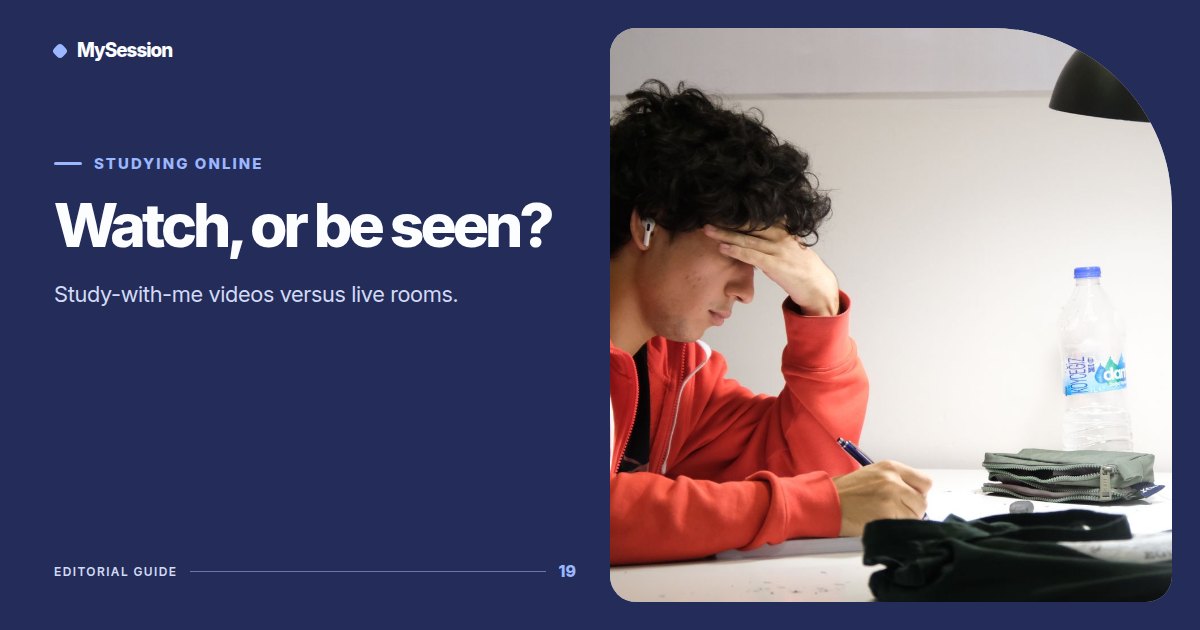
Two ways to study "with" someone online
If you have ever searched for help focusing while you study, you have probably found "study with me" videos: long recordings or livestreams of someone studying quietly, often with a timer, rain sounds, or lo-fi music. They are hugely popular, and for many students they make a lonely desk feel less empty.
Live study rooms take a different approach. Instead of watching someone study, you join a room where other students are studying at the same time and can see that you are there too. Both formats can help. They work in different ways, and knowing the difference helps you choose the right one for the task in front of you.
What study-with-me videos do well
A study-with-me video is easy. You open it, press play, and start. There is no account, no camera, and no social pressure. The video gives you:
- Ambient company. Seeing someone else work makes studying feel less isolated.
- A built-in rhythm. Many videos show a Pomodoro timer on screen, so you can follow their focus and break blocks.
- Atmosphere. Background sound, a tidy desk, or a library setting can help you settle in.
For review sessions, reading, or low-stakes practice on a day when you just need a little structure, a video can be enough.
Where videos fall short
The person in the video cannot see you. Nobody notices if you stop after ten minutes, open another tab, or never start. The video carries on whether you are working or not.
That is the key difference. A video provides presence you watch. It does not provide presence that watches back. For many students, the second kind is what makes it harder to drift, because someone else expects them to be working during the block.
Recorded videos also cannot respond. You cannot share an intention, adjust the plan, or check in at the end. The structure is fixed, even if it does not fit your task.
What live study rooms add
In a live study room, everyone shares the same timeline and the same stages. You state what you plan to study, work during the focus block, and check in at the end. A few things change compared with a video:
- Mutual visibility. Other people can see you working, which turns a vague plan into a small commitment.
- Your own intention. You write down a specific goal, such as "complete practice questions 1-15," instead of following someone else's session.
- A real check-in. At the end, you say what changed. That moment of reporting is often what keeps the next session on track.
Several platforms offer live student rooms. As of October 2026, CSW Study Stream runs 24/7 student rooms with cameras on and a synced timer, and StudyClock offers online study rooms. MySession offers scheduled group sessions and always-open rooms for students and anyone else studying or working independently; see virtual coworking for students for how that looks in practice.
Which one to use
| If this is your situation | Try |
|---|---|
| You want background company while reading or reviewing | Study-with-me video |
| You keep starting, then drifting after a few minutes | Live study room |
| You cannot use a camera or microphone right now | Video, or a live room whose rules allow camera-off |
| You have a specific assignment you keep avoiding | Live room with a clear intention |
| You want to study at an unusual hour | Always-open live room or a long recorded video |
| You need to track progress across a week | Live sessions with written intentions and check-ins |
You do not have to choose permanently. Many students use a video for easy review and a live room for the assignment they are dreading.
Make either format more effective
Write your goal before you press play or click join. Choose a block length that matches the task; our guide to choosing a 25, 50, or 90-minute focus block can help. Put your phone out of reach, and keep a scrap of paper for stray thoughts so they do not pull you out of the block.
For a full study routine built around shared sessions, read the body doubling study routine. If you want to see how a live room feels, find a session, pick one assignment, and try a single focus block.