Body Doubling for Cleaning and Household Chores
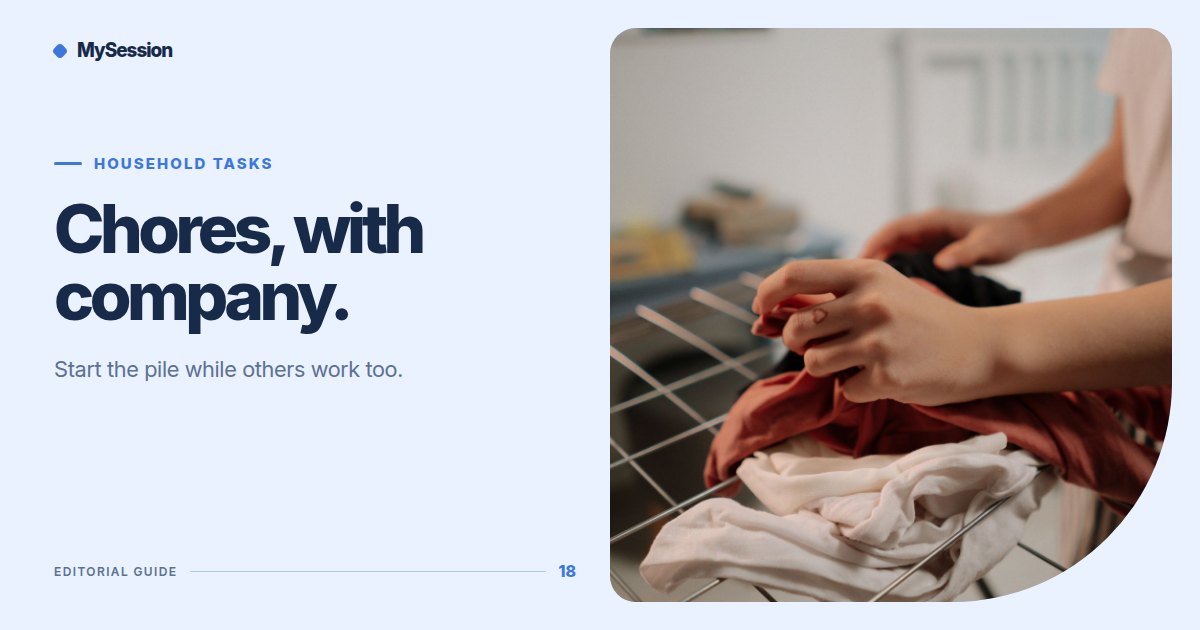
Why chores are hard to start alone
Household tasks rarely need much skill. The hard part is starting: the laundry pile, the kitchen after a long day, the paperwork drawer you have avoided for a month. There is no deadline, nobody is waiting, and the task can always wait until later.
Body doubling helps with exactly this kind of task. When someone else is working at the same time, even on something completely different, the session gives the chore a start time and an end time. You are no longer "going to clean at some point"; you are cleaning during this block. If you are new to the idea, read what body doubling is first.
How online body doubling works for chores
Online body doubling is usually associated with laptop work, but the same structure works away from the desk:
- Join a live room and state a small, visible intention, such as "Fold one basket of laundry" or "Clear and wipe the kitchen counter."
- Leave the device somewhere stable, such as on a shelf or a counter, and get up.
- Work through the focus block. Come back to the screen at the break or when the timer ends.
- At the check-in, report what changed and choose the next small task.
You do not need to stay in front of the screen. The shared timeline marks the start and the end, and the other people working are a reminder that the session is still running.
Camera, sound, and privacy at home
Chores happen in private spaces, so think about what the room can see and hear:
- Camera. In rooms where the camera is optional, you can keep it off or point it at a neutral wall or your work surface. Some rooms require a camera; they show a badge on the session card, so choose a different room if that does not suit you. Our guide to body doubling with the camera on or off covers this choice.
- Microphone. Keep it muted. Running water, a vacuum, or a dishwasher is loud through other people's headphones.
- Other people at home. Make sure housemates or family members have not been caught on camera without agreeing to it.
Size the task to the session
The most common mistake is choosing a task that is too large. "Clean the apartment" is not a session; it is a weekend. Break it into tasks that fit one block:
| Session length | Example chore |
|---|---|
| 15 minutes | Empty the dishwasher, take out recycling, clear one surface |
| 25 minutes | Fold and put away one load of laundry, clean the bathroom sink and mirror |
| 50 minutes | Deep-clean the kitchen, sort one drawer or closet shelf |
If you are stuck, pick the smallest task that would make a visible difference. A 25-minute focus session is often enough to break the stalemate, and many people continue into a second block once they have started.
Life admin counts too
The same approach works for tasks that are not cleaning but feel just as heavy: sorting mail, paying bills, filling in forms, booking appointments, or organizing digital files. These often involve a screen, so they fit a standard focus block well. Keep sensitive details out of your intention: "Pay two bills and file the receipts" is specific enough without naming accounts or amounts.
Try a two-block routine
When the backlog feels overwhelming, try this:
- Block one (25 minutes): the task you have been avoiding the longest, made small enough to finish.
- Break (5 minutes): stop, drink some water, and notice what changed.
- Block two (25 minutes): the next task on the list, or a continuation of the first.
Write the next chore at the final check-in so you know where to start next time. If chores are part of a broader pattern of putting things off, the page on body doubling for procrastination has more ideas, and the guide on how to start a focus session when you feel stuck helps with the first minute.
When you are ready, find an open room, choose one small task, and start the timer with other people.