What Is Body Doubling? A Practical Guide
What body doubling means
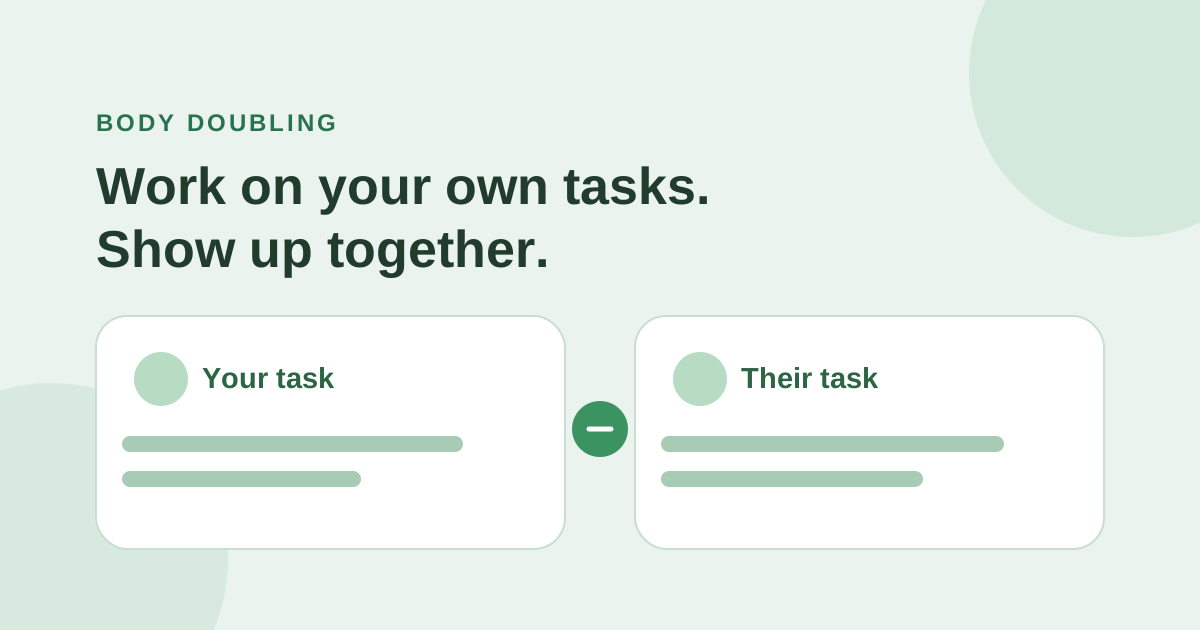
What is body doubling? It is working on your own task while another person is present and working too. The other person is a body double: they provide company and a shared working context, not supervision or help with the task itself. You might write a report while someone else studies, sorts paperwork, or codes. Neither person needs to understand the other's work.
The useful part is often the transition into work. A vague intention becomes easier to act on when there is a time to begin, a place to work, and someone else also settling into a task. This is a practical focus method rather than a guarantee of productivity or a form of treatment.
What happens in an online session?
An online body doubling session can be very simple. People join a room, name what they intend to do, work independently for a set interval, and check in when it ends. Some rooms use video; others allow quieter participation. The point is shared presence and a clear boundary around the work block, not constant conversation.
Try this first session:
- Pick one outcome you could verify by the end: draft a paragraph, answer ten questions, or clear one small queue.
- Join a live body doubling room or choose a scheduled session if an appointment helps you show up.
- State your intention in a sentence. Keep private information out of it if you are working with confidential material.
- Work on the task during the focus stage. If you get distracted, return to the smallest visible next action.
- At the check-in, say what changed and write down the first step for next time.
You do not have to finish an entire project for the session to be useful. A ten-minute start or a partial draft is still evidence that you moved the work forward.
Why can shared presence help?
Being alone is not the only reason people have trouble starting. Sometimes the task is too broad, the first step is unclear, or there is no visible moment to begin. A body doubling room can supply that moment. It also makes it easier to notice when you have drifted away: the room is still in a focus block, so you can return without creating a new plan.
That does not mean the other participants should watch your screen or judge your output. Good accountability is light enough to support independent work. You choose the task and remain responsible for its quality. If the task requires a decision, missing information, or expert help, a room cannot replace those things.
Choose a format that fits the task
A 25-minute focus session can help when starting is the main challenge. A 50-minute session leaves more time for a normal work unit. Longer blocks can protect context for writing, design, or complex problem solving, especially when the materials are already ready.
Scheduled sessions create commitment because the start time is fixed. An always-open room removes the wait when you want to begin immediately. Neither is universally better. Pick the format that removes the obstacle you actually have today.
For a study-specific routine, see our body doubling study guide. If you are stuck before the first minute, follow the ten-minute guide to starting a focus session.
What body doubling is not
Body doubling is not tutoring, a team meeting, or a requirement to share private work. It does not mean doing the same task as everyone else. It is also not a substitute for professional support when attention, anxiety, or another health concern affects your daily life.
The practical test is smaller: after one session, was the next action easier to begin, and do you know what to do when you return? If not, change the outcome, session length, or room format. A focus method should make the work more approachable, not add pressure to perform for strangers.